
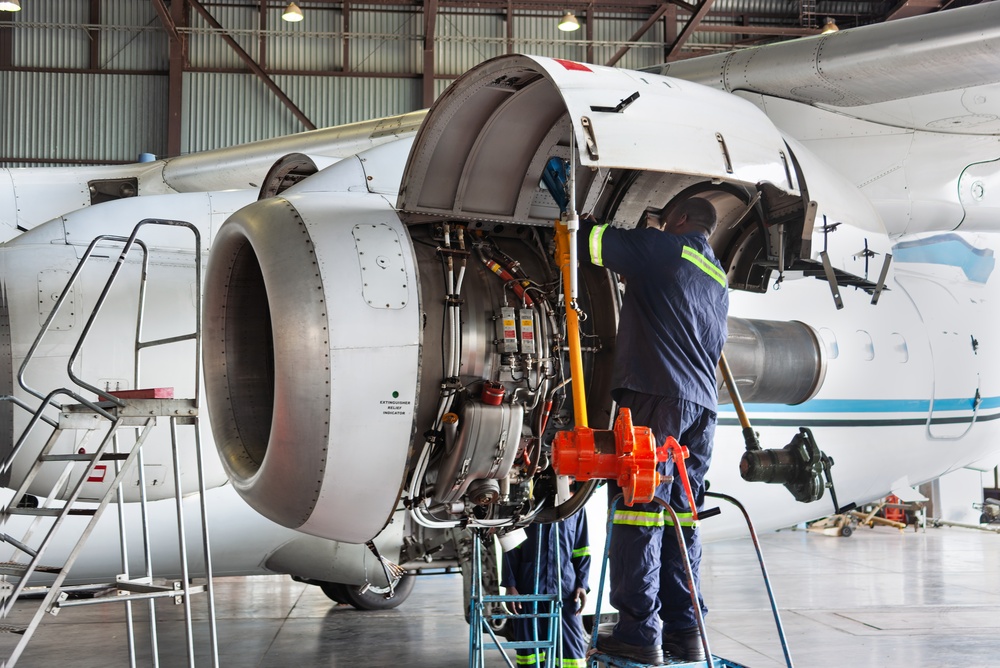
The MRO super-cycle continues in 2026, with familiar pressures still stressing commercial aviation. Projecting into the future the numbers look daunting, with Boeing's Commercial Service Market Outlook reporting over $7 Trillion in support and service and over 710,000 new MRO technicians needed worldwide over the next 20-years. (Boeing, 2026)
How did the MRO labour crunch get so intense?
MRO was sent into a tailspin during COVID, when there was a 30% drop in people obtaining mechanical certification.
That sudden drop in fresh technicians accelerated an issue which was always likely to affect the industry eventually. With most technicians over 50, the labour market is naturally aging faster than it can be replaced. The 2020 drop only sped up the shortfall.
Pre-covid MRO labour costs grew between 2-3% year-on-year, however in 2023, when the market contracted, costs jumped over 7%, before settling down to roughly double the pre-covid levels. (OliverWyman, 2024)
The crisis was softened slightly with improved training, automation, planning and retention; however, any measure that doesn't introduce new talent to the market can only be seen as a temporary solution.
This year, the scale of the labour gap is becoming clearer, especially outside the US, where the GTF crisis has hit hardest. Unsurprisingly, engine technicians are one of the MRO sub-categories under the most pressure. The Pratt & Whitney case is part of the reason, but the issues in the engine market are systemic and would likely have caused costly disruption even without the major recall. (ChicagoBusiness, 2022), (LeehamNews, 2026)
How can you navigate the labour shortages?
In the short-term be best placed and connected to secure what talent there is available.
At CMC we work with a network of highly skilled specialists across the world. Partnering with us gives you a better chance of finding one of the few technicians open to something new.
In the mid-to-term there's an argument for a two-pronged strategy; primarily focusing on trainee recruitment. It seems there is no better investment for MRO shops or airlines than investing in emerging talent. However, on the other side of the coin it seems hard to ignore retention: better pay, more wrench time and simplified bureaucracy are all tools helping keep aging staff for longer.
Is there a fix for the labour shortages?
Sitting in plain sight, two underutilised groups might offer a solution: women and veterans.
Women make up over 40% of the workforce, yet less than 3% obtain mechanical certification. Given the potential for high wages, casting a wider net could prove fruitful. Veterans also offer a potential pool of talent with plenty of transferable skills; however, only around 10% of experienced veterans find their way into civilian technician roles. (Aviationweek, 2023)
While it always takes time to train new technicians, there is a plausible argument that training women already closely aligned with technician roles, or veterans with ample transferable skills, could accelerate new recruitment channels. (GeneralAviationNews, 2026)
How can I retain my MRO workforce?
Retention isn't just about wages; another critical component is maximising wrench time.
On top of rising wages, there is room to improve the way technicians spend their time. At present, a significant share of technician time is lost to documentation and other non-wrench tasks, reducing the time available for hands-on maintenance. Redressing this imbalance will be necessary both to keep up with rising demand and to retain experienced, ageing staff who prefer having a tool in their hands instead of a pen. (Aero-NextGen, 2025)
Whatever moves MRO shops or airlines make, there's no doubt everyone will be competing for technicians for the next two to five years. Wage growth is likely to keep rising, albeit not as quickly as 2023.
So how do you find your next MRO technician? In the short-term finding a reliable consultancy partner who is best place to find business critical roles in civile aerospace and in the wider STEM market. That's where we can help. To find out more, schedule a call with us today. In the mid to long term, invest in the future and explore untapped pools of potential. Together this dual approach is the only way for MRO shops or airlines to keep afloat in the current crunch.
Related blog

31 Mar, 2026

28 Jan, 2026