BESS in 2026: US FEOC compliance set to squeeze BESS growth by up to 69%

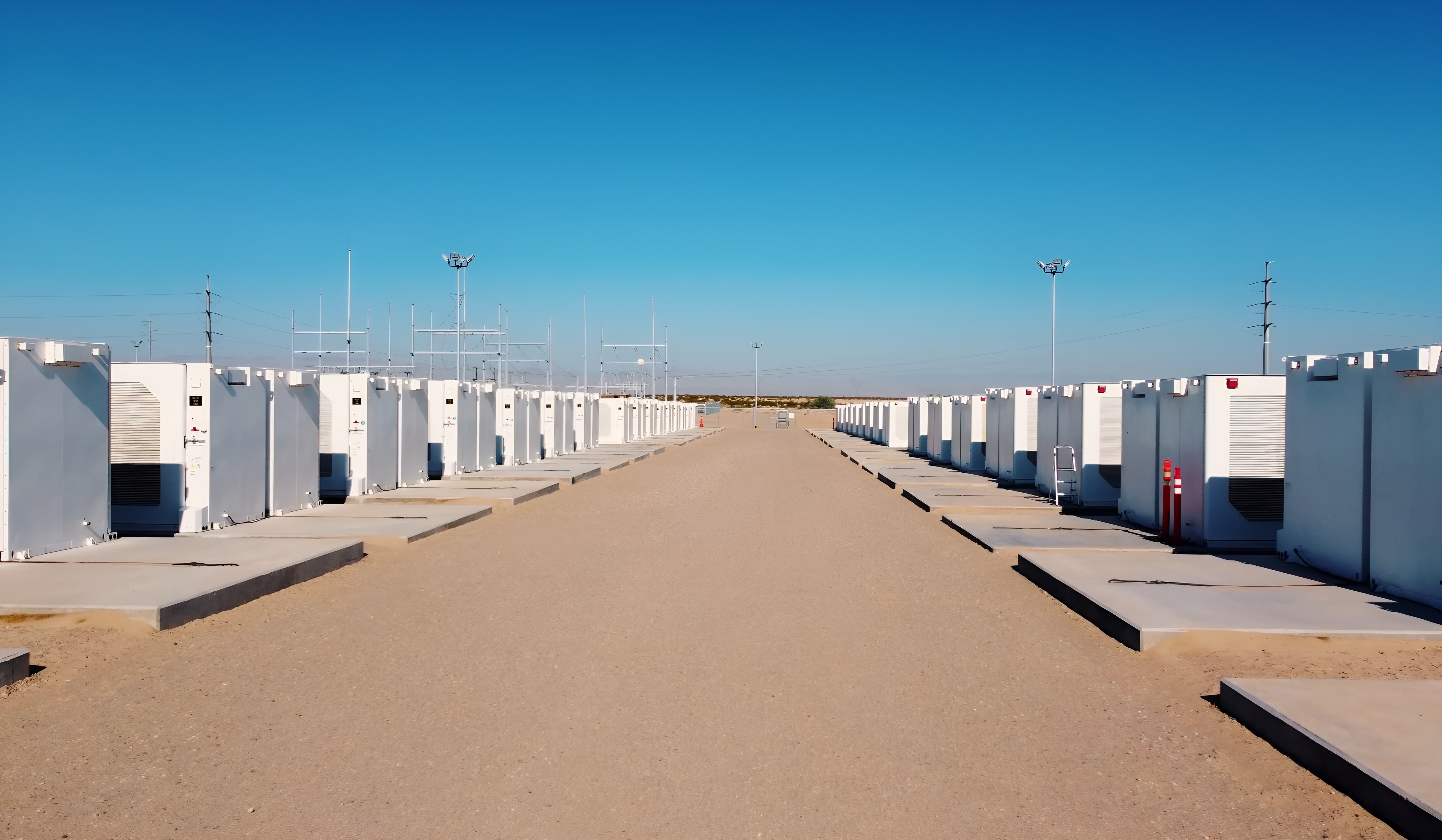
More math, risk, and rules. There’s a lot going on in BESS this year, and while the GWh increases globally, so does the complexity, especially in the US. New FEOC compliance rules, existing reciprocal tariffs and fierce competition threaten to put the US at a disadvantage. Here’s everything we are keeping an eye on, and how investors, managers and professionals can navigate BESS in 2026.
How did BESS look in 2025?
Worldwide BESS installations increased by 61.3% last year and that pattern of growth continues if not picks up speed in 2026. While China continues to dominate the sector, boasting a capacity 1.75X larger than the second market (US), heavy investment in Europe and the US, plus technological advances could disrupt the current status quo over the next five years. (BloombergNEF, CleanPower)
BESS has become a sector marred with strategic security considerations as well as profit and innovation. US tariffs are a sign of how significant those strategic considerations are. The 2025 tariffs caused waves of disruption as BESS relies on a fluid global economy and 2026 revisions – Foreign Entity of Concern (FEOC) - complicate both math and law.
That heightened complexity affects everything in the sector, from innovation to legislation, but the main result is the deceleration of US BESS growth.
China leads the way in BESS and controls the supply chain
China started the BESS race and despite efforts to curtail its dominance, looks set to continue and extend its lead. AI data centers and renewable objectives are the main drivers of this explosion, with AI data centers responsible for 40% of China’s new 2026 144 GWh capacity. As well as total capacity China can boast about its monopoly over supply chains, with approximately 90% tied up in its economy.
There are many reasons for Chinese dominance, but predominately its position as market leader of battery cell producer is the main factor. Although the US has reacted, trying to break its dependence on Chinese cells, it’s unlikely to have a meaningful result. (EngeryStorageNews, ESSNews)
Is Europe on track to meet its 2030 BESS goals?
No. In Europe, the growth rates are impressive but misleading. Since the end of 2021, the EU & UK have increased their BESS capacity by ten-fold (7 to 70 GWh). That sounds incredible, but the truth is, a similar growth cycle is needed to meet the European BESS target of 750 GWh by 2030. The reality is, Europe is still a bit-part player in BESS and is likely to stay that way unless new sovereign technology emerges. (EC)
How will US tariffs impact BESS growth?
Optimists might argue US Tariffs could be turning the tide. Although right now they are costing up to 69% extra in BESS production. Why? FEOC compliance rules on Chinese batteries and components are hiking prices.
While South Korean deals and heavy internal investment aim to wrestle supply chain control from China, that outcome is unlikely to impossible. It will also take 2-3 years before investment turns to online capacity. So, while the US is on course to meet its installation's goal of 110 GWh by 2030, it might be shooting itself in the foot while it does it. (BloombergNEF)
A conservative view might point to overall chaos caused by two years of tariffs, expensive reactions and geopolitical uncertainty which all threaten to pull the brakes on BESS growth in the US. 2026 is the year in which the US will feel the squeeze; the last two years smart developers have been planning, stockpiling batteries and breaking ground before new FEOC compliance rules hit. However, these measures can only last so long and 2026 is likely the year stockpiles and forward-thinking strategy is exhausted. Some analysts predict an 11% contraction not growth for US BESS driven by FEOC constraints. (CleanPower)
The math is complicated but generally understandable. Essentially US BESS projects face a 30-40% loss if they fail to meet new FEOC compliance rules. That’s because not meeting new FEOC compliance rules results in forfeiting Investment Tax Credits. (IRS)
Given that 90-100% of BESS projects use at least one Chinese manufactured component and most cells are produced in China, passing compliance is almost impossible. And it’s not just a one stop compliance shop. Developer claims an ITC and then makes payments in any of the next 10 years under a contract that gives a Specified Foreign Entity effective control over the project, the full ITC must be repaid. Hence the hard pivot to other sources, that while costing more, will at least make projects eligible for ITC. (Energy.gov)
What we are seeing
“The state of BESS in the US is complicated. We’re seeing a real divide right now between the companies that were cautious and prepared (stockpiling parts and investing early) and those that didn’t move fast enough.
But despite the panic over tariffs, nobody is slowing down. Because equipment has gotten so much more expensive, you can't just rely on cheap parts to make a project profitable anymore. Everything now comes down to how well a project is actually built and run. That is why we are seeing such a massive scramble for people.
Our clients don't just need builders; they need people with deep, boots-on-the-ground experience navigating the hyper-local laws and specific grid requirements of regions like ERCOT, CAISO, or MISO. Finding someone who has both BESS construction experience and regional market expertise is the ultimate challenge right now.
The positive news is that the expertise does exist. Through our hands-on delivery of these complex projects across the country, CMC has built an active workbench of consultants who have already faced these exact regional and construction hurdles for other clients. The industry is adapting quickly, and having those proven teams ready to deploy is what keeps these vital energy assets moving forward.” - Mike Lyons, CMC Consulting Lead – U.S. Energy
How investors are navigating US BESS tariffs
Front-loading and stockpiling. The most immediate response in 2025 was to order batteries early. Total US lithium-ion imports jumped 26% from 2023 to 2024, with December 2024 marking an all-time high for monthly Chinese battery exports to the US as buyers rushed to secure supply. Those who did this are commissioning projects through H1 2026; those who didn't are paying the 58%+ tariff. (EnergyStorageNews)
Locking in construction. A record number of projects began construction in late 2025 to lock in ITC requirements, making up for a shortfall as activity slowed mid-year. Under the rules, beginning construction (either physical work or 5% capex spend) before certain dates protects a project from FEOC material assistance requirements — so developers rushed to break ground. (SolarPowerWorldOnline)
Pivoting to Korean cell suppliers. Samsung SDI, LG Energy Solution, and SK On all announced US domestic BESS manufacturing commitments. Samsung SDI is ramping to 30 GWh by end-2026. LG ES is also expanding production in Phoenix to approximately 50 GWh of North American ESS manufacturing. The Trump administration announced LG ES closed a $4.3 billion supply agreement with Tesla, to build a lithium iron phosphate prismatic battery cell factory in the US. These Korean-made cells are FEOC-compliant and avoid the China-specific tariffs. However, they aren’t completely isolated from tariff pain – 25% reciprocal tariffs on South Korea increased import costs for battery products from there too. (EnergyStorageNews)
Repurposing EV gigafactories. EV demand decreased due to the removal of the EV consumer tax credit, and battery manufacturing capacity from those gigafactories is now being repurposed to BESS. It is expensive to repurpose these facilities, but with so much sunk cost in a gigafactory, it is happening. (EnergyStorageNews)
State policy as a backstop. California's Net Billing Tariff, Massachusetts' SMART 3.0, and Illinois' rebate initiatives are sustaining steady C&I deployment through 2029, while the residential segment's shift toward third-party ownership models — which accounted for 57% of the market in Q3 2025 — is helping mitigate the impact of federal credit expirations. (CleanPower)
China-US BESS gap is widening
US tariffs are not the only factor putting the squeeze on the US BESS market; they are significant and represent an extensive bottleneck. It’s also not clear if the resilience (South Korean deals, US based investment and repurposing facilities) will be effective or money misspent. It will take 2-3 years before these new or repurposed sites come online.
If the US BESS sector wants to enjoy the levels of growth it has done, something must give. Right now, it seems as though competitors in the market might punt profits for long-term positions. 500 GWh of battery storage is expected to be added in the US from now to 2031, an increase of 250% over the previous five-year period.
While that looks impressive it still falls well short of Chinese development. The 2025 tariffs were designed to supercharge US manufacturing and help close the gap between it and China on future critical industries. However, the gap is only widening; China adding US five-year-goal figures in just 18-months. (SolarPowerWorld)
It’s hard to imagine a future where the US stands still for three years, and the signs are it won’t. But the question still remains; will the 2026 FEOC compliance rules pay dividends later down the line or will they only hamper projects from growing at the scale needed to meet demanding targets.
Globally, the demand for BESS expertise is growing all the time. But in the US the demand is being felt even more acutely, especially the demand for specialists who understand the 2026 FEOC compliance laws and the supply chains which now surround it. Fortunately, CMC has a network of experts plugged into the US BESS landscape who can make a real difference to a projects success.
For the last five years we’ve been building our network from our base in Dallas and have seen great results from our deployed experts. Our focus on both compliance knowledge and BESS specialty makes our experts especially suited to navigate all the challenges facing projects in 2026.
At CMC we have a network of expertise ready to deploy on all types of projects, BESS included. Click here to speak with our BESS project specialists.
FAQs
What are FEOC requirements and how do they affect US battery storage projects?
Foreign Entity of Concern (FEOC) is a designation under US law that restricts clean energy tax credit eligibility for projects using battery components sourced from certain countries, primarily China.
From 2026, BESS projects that source cells or materials from FEOC-designated suppliers cannot qualify for the 30% Investment Tax Credit (ITC) under the Inflation Reduction Act. This has forced US developers to strike deals with South Korean manufacturers such as Samsung SDI, LG Energy Solution, and SK On, who are building US-based production facilities. Projects that began construction before key FEOC cutoff dates — locking in ITC eligibility — are safe, but projects signed after stockpiles are exhausted in 2026 face significantly higher costs or must source domestically.
How much have Trump's tariffs increased the cost of battery energy storage in the US?
US tariffs on Chinese battery imports have increased US BESS costs by between 56% and 69% since January 2025.
The duties have layered up over time: a pre-existing Section 301 tariff on non-EV batteries rose from 7.5% to 25% in January 2026, compounded by additional IEEPA and general import tariffs that briefly pushed the combined rate on Chinese BESS to over 145% in April 2025 before a temporary 90-day truce reduced it to around 40–58%. The practical effect in 2026 is a projected 11% contraction in US utility-scale BESS installations as pre-tariff stockpiles run out, and developers absorb higher procurement costs.
Will the US meet its 110 GWh annual BESS installation target by 2030 despite current tariff disruption?
The US target of 110 GWh in annual BESS installations by 2030 remains achievable but is under pressure.
Industry analysts project approximately 500 GWh of new battery storage will be deployed in the US between 2026 and 2031 (a 250% increase on the previous five-year period) suggesting strong structural momentum. However, 2026 and 2027 are expected to see contraction before domestic manufacturing from South Korean and repurposed EV gigafactories comes fully online. The critical variables are whether the Investment Tax Credit remains intact, how quickly FEOC-compliant domestic supply scales, and whether AI data center demand, which is currently driving 40% of new BESS capacity in China, creates sufficient US-side demand to justify accelerated domestic investment. The consensus view is a dip now and a strong recovery from 2028.
References
-
Nsitem, N., & Sekine, Y. (2025, June 18). Global energy storage growth upheld by new markets. BloombergNEF. https://about.bnef.com/insights/clean-energy/global-energy-storage-growth-upheld-by-new-markets/
-
Wood Mackenzie & American Clean Power Association. (2025, December). US energy storage monitor Q3 2025. American Clean Power Association. https://cleanpower.org/news/us-energy-storage-monitor-q3-2025-woodmackenzie-acp/
-
Murray, C. (2026, January 16). China deploys 65GWh of BESS in December, 25% of 2025 global total. Energy-Storage.News. https://www.energy-storage.news/china-deploys-65gwh-of-bess-in-december-25-of-2025-global-total/
-
Rho Motion. (2025, April 8). What Trump's tariffs mean for the US battery storage industry. ESS News. https://www.ess-news.com/2025/04/08/what-trumps-tariffs-mean-for-us-battery-storage-industry/
-
European Commission, Directorate-General for Environment. (n.d.). Batteries. https://environment.ec.europa.eu/topics/waste-and-recycling/batteries_en
-
BloombergNEF. (2026, February 18). Battery storage costs hit record lows as costs of other clean power technologies increased: BloombergNEF. https://about.bnef.com/insights/clean-energy/battery-storage-costs-hit-record-lows-as-costs-of-other-clean-power-technologies-increased-bloombergnef/
-
Foley Hoag LLP. (2026, February 19). New IRS guidance clarifies material assistance FEOC requirements. https://foleyhoag.com/news-and-insights/publications/alerts-and-updates/2026/february/new-irs-guidance-clarifies-material-assistance-feoc-requirements/
-
U.S. Department of Energy, Office of Cybersecurity, Energy Security, and Emergency Response, & Idaho National Laboratory. (2024, November 1). Battery energy storage systems: Supply chain report (BESSIE). U.S. Department of Energy. https://www.energy.gov/sites/default/files/2025-01/BESSIE_supply-chain-battery-report_111124_OPENRELEASE_SJ_1.pdf
-
Energy-Storage.News. (2025). US BESS investment already impacted by tariffs but industry predicted to remain resilient. https://www.energy-storage.news/us-bess-investment-already-impacted-by-tariffs-but-industry-predicted-to-remain-resilient/
-
Wood Mackenzie & American Clean Power Association. (2026, March). US energy storage monitor Q4 2025 / full year 2025. American Clean Power Association. https://www.solarpowerworldonline.com/2026/03/woodmac-us-energy-storage-deployment-increased-by-52-in-2025/
-
Energy-Storage.News. (2026, January). US battery manufacturing could cover domestic BESS demand within a few years. https://www.energy-storage.news/us-battery-manufacturing-could-cover-domestic-bess-demand-within-a-few-years/